Japandi Style: A Practical Guide from a Japan-Born Design Tool
Japandi is one of the calmest, most livable interior styles you can bring into a US home — and it is surprisingly forgiving for renters and first-time decorators. This guide is for anyone who loves the clean lines of Scandinavian design but wants something warmer and quieter. We build InteriorCapsule in Japan, so we approach Japandi from its Japanese roots: not as a trend, but as a way of living with fewer, better things.
What Japandi actually is
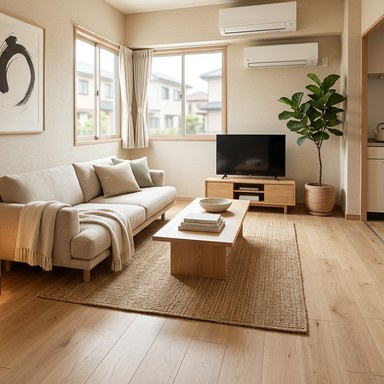
“Japandi” blends two words: Japan and Scandi (Scandinavian). It sits at the intersection of two design traditions that turn out to share a lot of DNA.
From Japan it borrows wabi-sabi — the appreciation of imperfect, natural, and unhurried beauty. A hand-thrown ceramic mug with a slightly uneven glaze, the grain of unfinished oak, a little empty wall left empty on purpose: these are features, not flaws. From Scandinavia it borrows function and comfort — the Nordic idea that a home should be practical, well-lit, and cozy through long dark winters (what the Danes call hygge).
Put them together and you get a room that is warm but uncluttered, natural but modern, minimal but never cold. That last part is the whole point: Japandi keeps the discipline of minimalism while adding the warmth that pure minimalism often lacks.
Four core principles
1. Low-profile furniture
Japandi rooms sit low to the ground. Think platform beds, sofas with shorter legs, and coffee tables around 14–16 inches (35–40 cm) high. Low furniture makes ceilings feel taller and the whole space feel grounded and calm. It echoes the traditional Japanese habit of living close to the floor.
2. Natural wood and honest materials
Wood is the hero, and it usually stays close to its natural color — oak, ash, walnut, or bamboo, with a matte or oiled finish rather than a high gloss. Around it, layer other natural materials: linen, cotton, wool, rattan, paper, stone, and unglazed ceramic. Avoid shiny plastics, chrome, and anything that looks synthetic.
3. A muted, earth-toned palette
Colors are soft and grounded: warm whites, oatmeal, greige, clay, sage, charcoal, and deep browns. Japandi often pairs the lighter Scandinavian neutrals with a few darker Japanese accents for contrast — a black-framed mirror, a charcoal cushion, a dark wood tray. Keep saturated or bright colors to a bare minimum.
4. Negative space (the empty parts matter)
In Japanese design, empty space (ma) is a design element, not wasted room. A Japandi space is defined as much by what you leave out as by what you put in. One considered vase on an open shelf says more than a shelf packed with objects. If a corner feels bare, that is often correct — resist the urge to fill it.
How Japandi differs from minimalism and from pure Scandinavian
These three styles are close cousins and easy to mix up. The differences are subtle but real, and knowing them helps you shop with intent.
| Japandi | Minimalism | Scandinavian | |
|---|---|---|---|
| Feeling | Warm, calm, grounded | Stark, precise, edited | Bright, cozy, cheerful |
| Materials | Natural wood, linen, ceramic, stone | Often smooth, monochrome, hard surfaces | Light wood, wool, lots of soft textiles |
| Color | Muted earth tones with dark accents | Mostly white, black, and gray | Light and airy; small pops of color |
| Imperfection | Welcomed (wabi-sabi) | Usually avoided | Neutral about it |
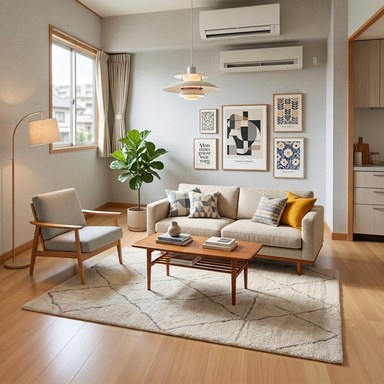
The short version: minimalism is about removing everything non-essential, which can read cold. Scandinavian is bright and playful with more textiles and the occasional bright accent. Japandi keeps minimalism’s restraint but softens it with natural imperfection and a warmer, earthier palette — roughly “Scandinavian minus the bright colors, plus quiet Japanese depth.” If you want to see all of these side by side, our guide to interior design styles lays them out.
How to Japandi-fy a US living room, step by step
You don't need to start over. Most American living rooms — whether it's a studio apartment, a rental one-bedroom, or a suburban family room — can move toward Japandi with a handful of deliberate changes. Work in this order.
- Declutter first. Japandi lives or dies on negative space. Clear the coffee table, the console, and the tops of shelves before you buy anything. Aim to keep only what you use or truly love.
- Set a muted base. If you can paint, go with a warm white or soft greige. Renters who can't paint can get most of the effect from a large neutral area rug (a 6×9 ft or 8×10 ft in oatmeal or greige) and neutral curtains to soften the walls you have.
- Lower the furniture. The single biggest Japandi move is choosing lower pieces: a sofa that sits closer to the floor, a low coffee table, a platform or low-frame bed. If replacing furniture isn't realistic, swap tall bookcases for lower, longer ones.
- Bring in natural wood in one consistent tone. Pick one wood family — say, light oak or warm walnut — and let your key pieces share it. Mixing three or four random wood tones is the fastest way to lose the calm.
- Layer natural textiles. A linen throw, a wool cushion or two, a woven basket for blankets. Texture is what keeps a muted room from feeling flat.
- Add a few dark, honest accents. A black-framed piece of art, a charcoal cushion, a dark ceramic vase. These small contrasts are what separate Japandi from plain Scandinavian.
- Finish with one living thing and soft light. A single plant — an olive tree, a snake plant, or a leafy branch in a stoneware vase — plus warm, indirect lamp light instead of a bright overhead. Then stop. Leaving it slightly under-decorated is the Japandi way.
If you'd rather see the finished look on your own room before you buy anything, that's exactly what our tool is for. Upload one photo, choose the Japandi (Japanese Modern) style, and you get a redesigned version of the same room in a couple of minutes. For a clean result, a well-lit, wide shot of the room works best — see how to photograph your room. And if you're new to AI redesign in general, what AI interior design is explains how it works. Curious what to expect from the results? Here is an honest look at AI room design expectations.
A note on how this works: the redesigned images are AI-generated concepts. The numbered tags on the furniture link to real products that resemble what you see — not the exact rendered item — so you can shop pieces similar to the look. Product links may be affiliate links; we may earn a commission at no extra cost to you.
Common mistakes to avoid
Making it too sterile
The most common Japandi mistake is stripping a room down until it feels like a showroom or a waiting area. Wabi-sabi is the antidote: add a little warmth and human imperfection back in. A slightly wrinkled linen throw, a handmade ceramic bowl, a woven basket, a plant that is not perfectly symmetrical. Japandi should feel lived-in and calm, not empty and clinical.
Choosing the wrong wood tones
Two wood-tone errors break the look. First, orange-toned or heavily yellowed woods (some builder-grade oak and older “honey” finishes) fight the muted palette — look for cooler, more natural or lightly grayed tones instead. Second, mixing too many different woods in one room. Commit to one or two tones and repeat them. When in doubt, matte and natural beats glossy and orange.
Treating it like all-white minimalism
Japandi is not an all-white room. If your space reads as cold, you have probably skipped the earthy tones and the dark accents. Add clay, sage, or charcoal, and introduce at least one genuinely dark element for grounding.
Over-buying
Because Japandi values restraint, it rewards buying slowly. Before you fill a room, it helps to right-size the few pieces that matter — our furniture size guide and room layout basics can keep you from over-furnishing. Renters especially can get a long way with removable, no-damage changes — see our renter-friendly room makeover ideas.
Why Japandi is worth the effort
Because it's built on restraint and natural materials, Japandi ages well — it doesn't chase seasonal trends, and a few quality pieces outlast a room full of fast furniture. It's also one of the more affordable styles to approach gradually, since the first and most important step (decluttering and opening up space) costs nothing. For a lot of US households, that combination — calm, warm, timeless, and forgiving — is exactly what a busy home needs.
See your own room in Japandi style
Upload one photo, pick the Japandi (Japanese Modern) style, and get a redesign of the same room in minutes. Six free designs to start — no sign-up required.
Try Japandi on my room → Or start from the home page →