Interior Design Styles, Explained (With AI Room Makeovers)
Picking a style is the fastest way to make a room feel finished. Once you name the look you're after, your choices narrow on their own — a rug, a lamp, and a sofa suddenly have to agree with each other, so you buy less and regret less. This guide walks through the styles built into InteriorCapsule, what defines each one, the colors and materials to reach for, and who it tends to suit. If you rent, don't worry: every style here works with pieces you can take with you.
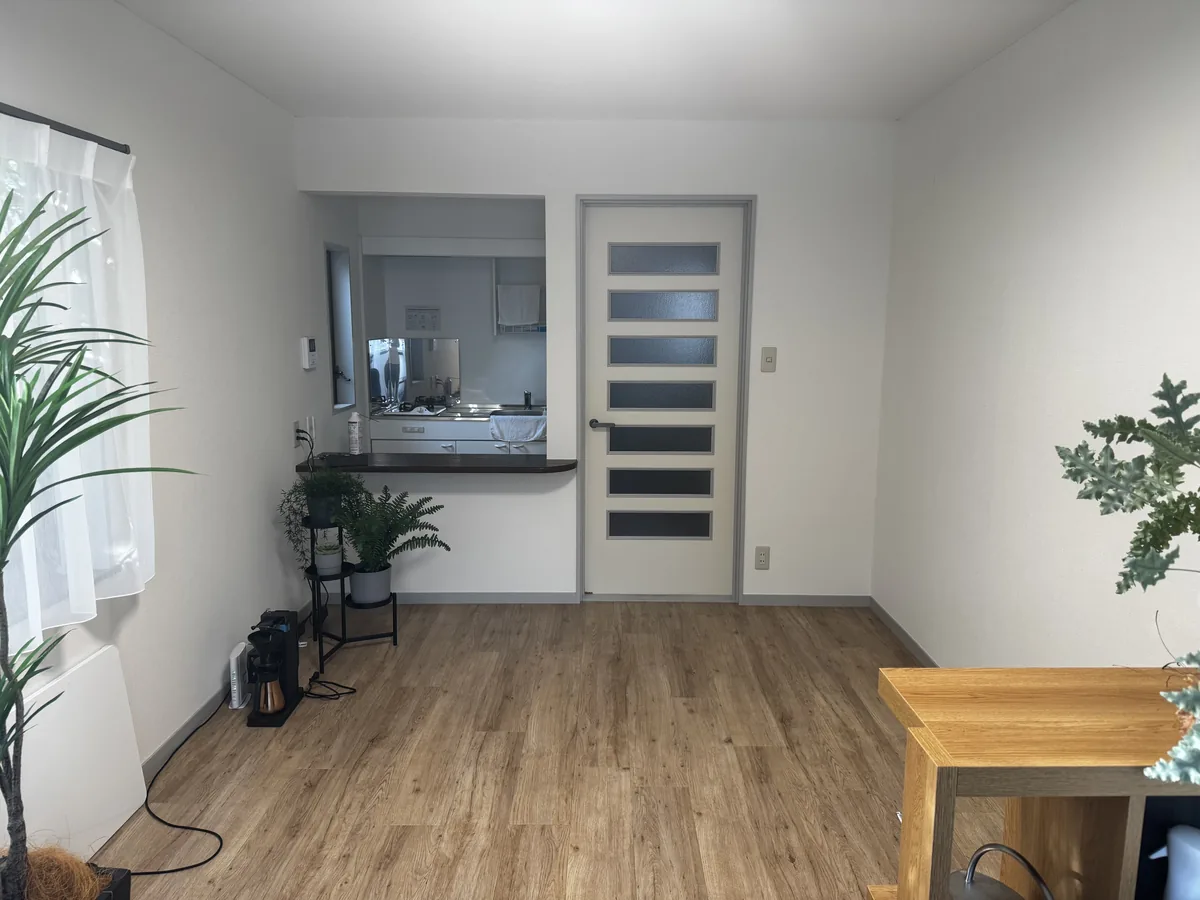
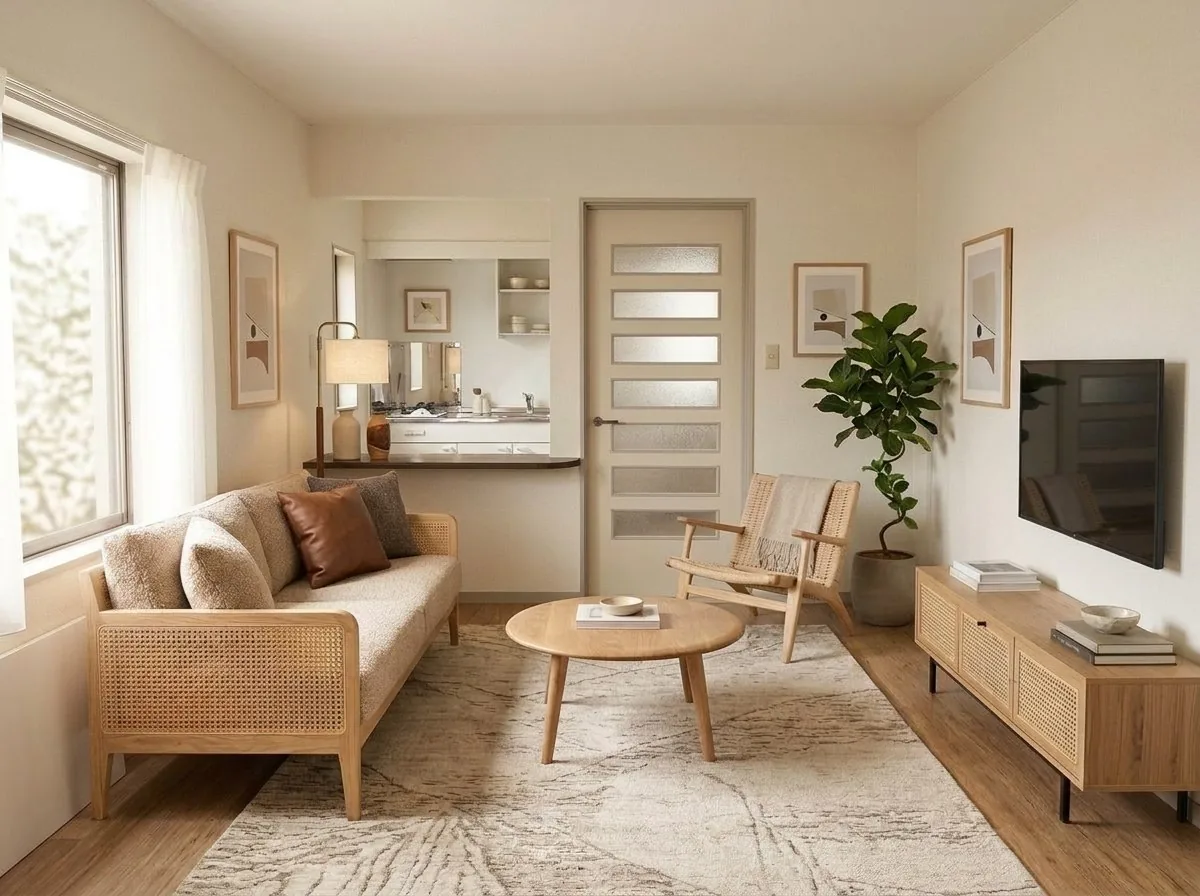
How to read this guide
Each section below covers a style's defining traits, its typical palette and materials, and the kind of person or home it suits. Styles are easier to judge on your own walls than in a mood board, so every section ends with a one-tap link that previews that look on a photo of your room. New to the idea? What AI interior design actually does explains the how, and what to expect from an AI redesign sets realistic goals before you start.
Modern
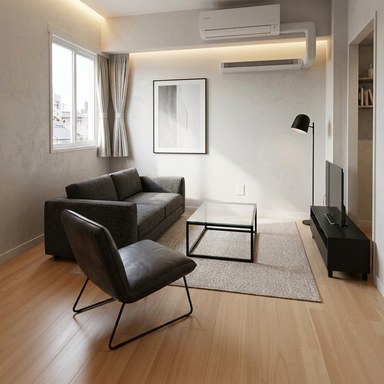
Clean lines, neutral colors, and nothing extra on display. Modern rooms lean on white, black, and gray, with glass, steel, and lacquered surfaces doing the talking. The trick is restraint: fewer objects, more visible "planes," and a place for everything so the room reads calm rather than empty. A low-profile sofa, a slim media console, and one large piece of art usually do more than five smaller things.
- Palette: white, charcoal, gray, with one deep accent
- Materials: glass, powder-coated steel, matte lacquer, smooth leather
- Suits: minimalists, small-space dwellers, anyone who dislikes clutter
Farmhouse
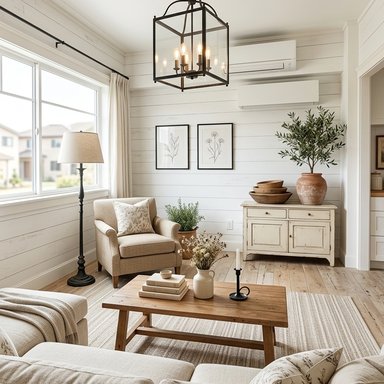
Cozy, rustic warmth with a clean, lived-in simplicity. Modern farmhouse pairs bright shiplap-look white walls with rustic, warm-toned wood — a chunky trestle table, a reclaimed-wood bench, open shelving. Black metal hardware and lantern-style lighting add contrast, while layered neutral linens (a slipcovered sofa, a waffle throw, ticking-stripe pillows) keep it soft and inviting. It's the most approachable way to make a room feel warm and gathered without any single piece feeling precious.
- Palette: warm white, cream, greige, weathered wood, matte black
- Materials: shiplap-look walls, rustic wood, black metal, linen, galvanized accents
- Suits: families, open-plan kitchens and living rooms, anyone who wants cozy over cool
Preview Farmhouse on your room →
Mid-Century Modern
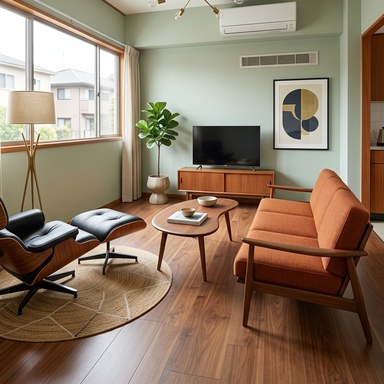
Character, curves, and a nod to mid-century classics. Mid-Century Modern rooms put personality first: tapered legs, a curvy shell chair, warm teak-toned wood, and mustard or olive accents. It has a collected, "I found this at an estate sale" feel that's hard to fake with a matching set. It's a favorite for anyone who wants a room that doesn't look like everyone else's, and it mixes happily with a few modern pieces so it never tips into a costume.
- Palette: warm wood, mustard, olive, burnt orange, cream
- Materials: teak and walnut tones, molded plywood, bouclé, brass
- Suits: collectors, thrifters, anyone who wants a one-of-a-kind room
Preview Mid-Century Modern on your room →
Boho
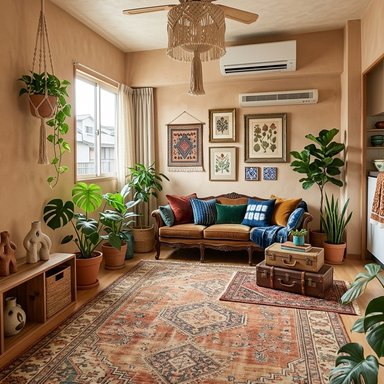
Relaxed, collected, and full of texture and life. Boho (bohemian) is the most personal of these looks: layered kilim and Persian-style rugs, rattan and cane furniture, macrame and woven wall hangings, and plants in every corner. Jewel-tone accents — terracotta, mustard, teal, plum — keep it warm and lively against a neutral base. There's no matching set and no single "right" answer, which is exactly the point: it rewards mixing pieces you've collected over time.
- Palette: warm neutrals with terracotta, mustard, teal, and plum accents
- Materials: kilim rugs, rattan, cane, macrame, woven textiles, brass
- Suits: plant lovers, collectors, renters who want warmth and personality
Scandinavian
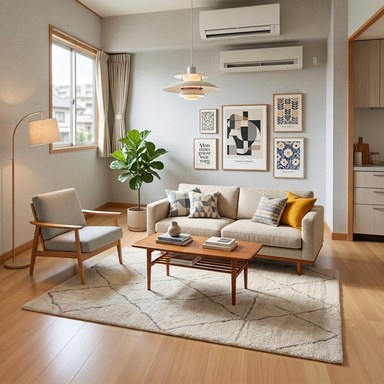
Light wood, white walls, and soft, low-key color. Born in a part of the world with long, dark winters, Scandinavian design is all about keeping a home bright and comfortable. Think oak or ash furniture, pale walls, and gray or dusty-blue fabrics, warmed up with a chunky knit throw and a few candles. It's forgiving and easy to build up piece by piece, which makes it a great first style if you're not sure where to start.
- Palette: white, warm gray, dusty blue, pale wood tones
- Materials: oak and ash, wool, linen, ceramic
- Suits: first-time decorators, low-light rooms, cozy-minimalists
Preview Scandinavian on your room →
Organic Modern
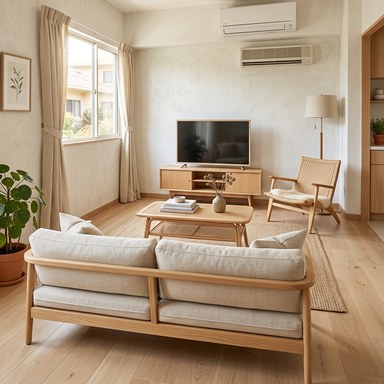
Earthy tones and natural textures you want to touch. Organic Modern builds a room from beige and ivory outward, layering solid wood, rattan, jute, and linen. It pairs beautifully with houseplants and reads relaxed rather than styled. Because it stays neutral, it fits almost any floor plan and quietly hides the mismatched things every real home has. If you like the idea but want it a touch more refined, read on to Japandi below.
- Palette: beige, ivory, sand, sage green
- Materials: solid wood, rattan, jute, linen, terracotta
- Suits: plant lovers, renters, anyone who wants a warm, easy-going room
Preview Organic Modern on your room →
Industrial
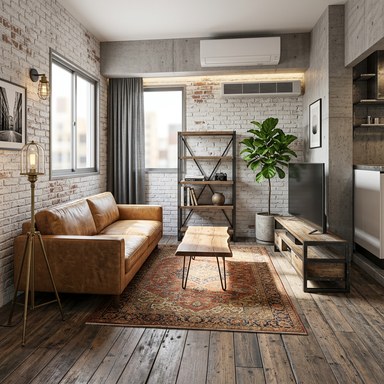
Raw materials, honest structure, and a bit of edge. Industrial style leans into raw materials and exposed structure: brick or concrete surfaces, exposed metal paired with warm wood, matte-black fixtures, and leather accents that soften the hard edges. Nothing is overly finished, and that's the point — the character comes from the materials themselves rather than from decoration. It reads confident and a little unpolished, which is exactly why it works so well in spaces with tall ceilings and big windows.
- Palette: charcoal, matte black, warm brown, rust, concrete gray
- Materials: exposed metal, reclaimed wood, brick, concrete, leather
- Suits: lofts, apartments that want character, fans of raw, honest materials
Preview Industrial on your room →
Japandi (Japanese Modern)
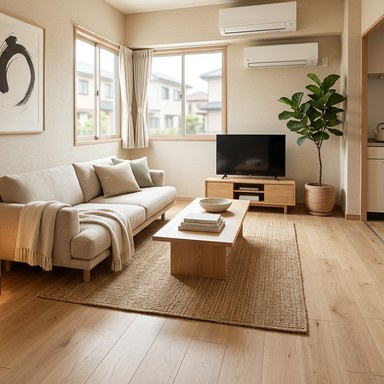
Japanese calm meets Scandinavian function. Japandi — a blend of "Japanese" and "Scandi" — favors lower furniture, matte and paper-like textures, and a warm, earthy palette. It's minimal without feeling cold, and it works whether your room is starkly contemporary or has traditional details. It's one of the most-searched looks right now for good reason: it's serene and it photographs well. We go deeper in our Japandi style guide.
- Palette: warm gray, clay, off-white, muted green
- Materials: low wood, paper, matte ceramic, natural fiber
- Suits: calm-seekers, small apartments, fans of minimal-but-warm rooms
Preview Japandi on your room →
More styles
These looks aren't in the main tile grid, but they're fully supported — reach them from any style link below, or just describe them in your own words with a custom instruction when you generate.
Boutique Hotel
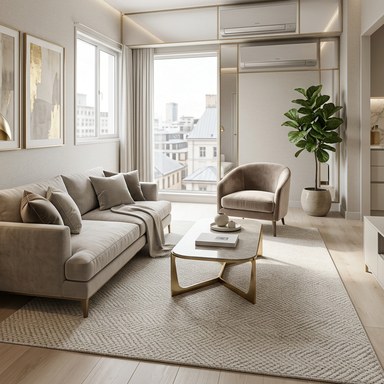
The polished, symmetrical feel of a nice hotel room. This look leans on dark brown and greige (gray-beige), matched pairs (two nightstands, two table lamps), a large framed artwork, and warm indirect light instead of one bright ceiling fixture. It's a "grown-up," put-together feel that's easy to start in the bedroom — a headboard, a pair of lamps, and layered bedding get you most of the way there before you touch the rest of the place.
- Palette: dark brown, greige, cream, muted gold accents
- Materials: dark wood, velvet, brushed metal, layered bedding
- Suits: bedroom makeovers, people who love order and symmetry
Preview Boutique Hotel on your room →
Soft Pastel
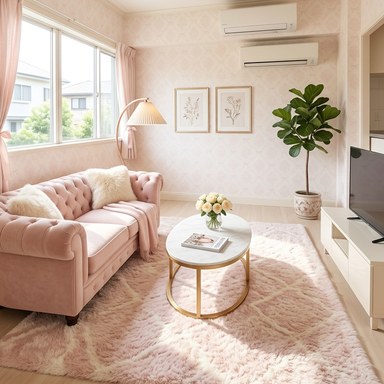
Soft, pretty, and a little romantic — without going overboard. This style pairs white furniture with dusty pink or lavender, gold hardware, and delicate details like fluted glass or a scalloped edge. The balance that keeps it grown-up: keep about 70% of the room simple and neutral, then let the last 30% carry the sweetness. Done that way, it feels styled and calm rather than overdone.
- Palette: white, dusty pink, lavender, blush, soft gold
- Materials: painted wood, velvet, fluted glass, brass accents
- Suits: soft-romantic taste, bedrooms and vanities, dressing areas
Preview Soft Pastel on your room →
Kids
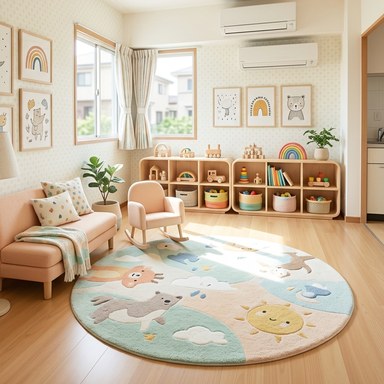
Built around safety, play, and a child growing up. A kids' room works best with rounded, low furniture, a washable rug, and open storage at a height a child can actually reach — roughly 24–36 inches (60–90 cm) off the floor. Resist the urge to make everything primary-colored. If you keep the base neutral and add color through bedding, art, and bins, the room grows up with the child and is far easier to restyle in a few years.
- Palette: neutral base with playful pops in textiles and art
- Materials: rounded wood, washable rugs, soft foam, open bins
- Suits: nurseries, shared kids' rooms, play corners in a family room
Still can't decide? Three quick filters
- Pick by wood tone. Light wood → Scandinavian or Organic Modern. Mid-tone → Mid-Century Modern or Japandi. Dark wood → Boutique Hotel or Industrial.
- Pick by "soft vs. sharp." Soft → Soft Pastel or Organic Modern. In-between → Scandinavian. Sharp and pared-back → Modern or Industrial.
- Pick by trying it. Words and other people's rooms only get you so far. Load a photo of your room and flip between two or three styles — your favorite usually becomes obvious in seconds.
A note for renters
None of these styles require touching your walls or floors. Because the makeover works from a photo, you can test a whole look before spending a dollar — then recreate it with a rug, a light, and one or two anchor pieces you can pack up when your lease ends. If you're working with a rental, our renter-friendly makeover guide covers damage-free swaps, and the furniture size guide helps you avoid the classic mistake of buying a sofa that's 6 inches (15 cm) too big for the room. For layout, start with room layout basics.
Get the best preview
Your redesign is only as good as the photo you feed it, so it's worth a minute to get that right. Shoot from a corner or doorway, step back so a wall, the floor, and a window are all in frame, and turn the lights on. Our short room photo guide shows the good and bad examples side by side.
See these styles on your own room
Upload one photo, pick a style, and get a redesign of the same room in minutes. Six free designs to start — no sign-up required.
Try it free →